What Is B2B Segmentation Software?
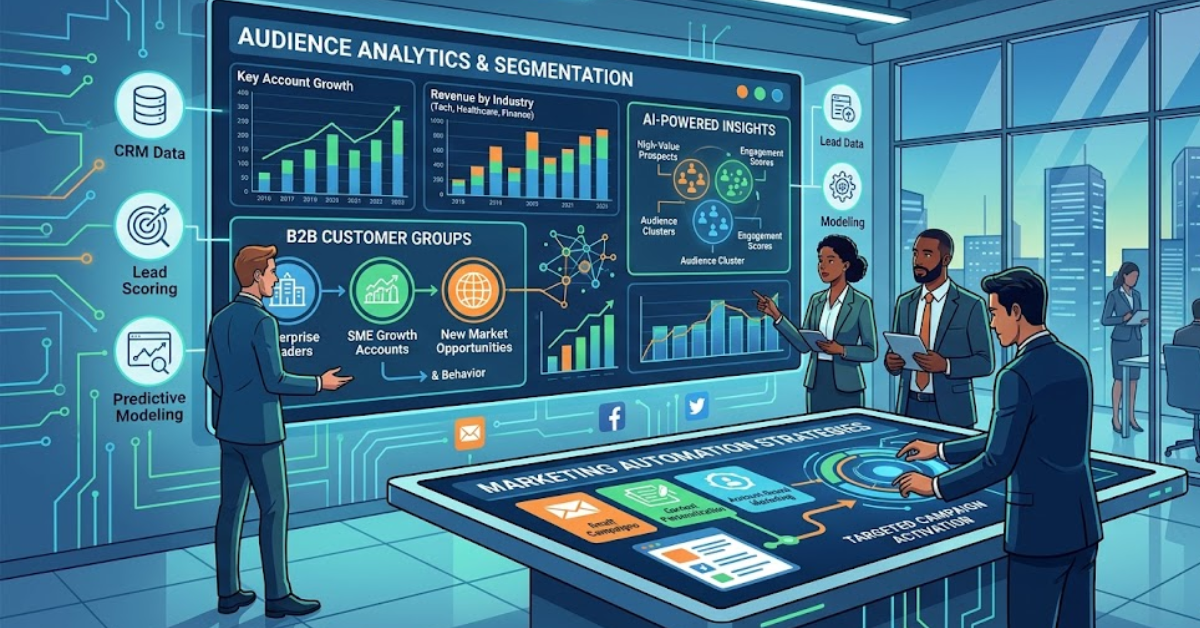
B2B segmentation software is a tool that helps businesses divide their customers and prospects into specific groups based on shared characteristics. Instead of sending the same generic message to every contact, businesses can target each group with content and offers that actually match their needs.
For example, a software company selling to both small startups and large enterprises cannot use the same sales pitch for both. A startup cares about affordability and ease of use. An enterprise cares about security, scalability, and integrations. Segmentation software makes it easy to identify these differences and act on them.
Why Does Segmentation Matter in B2B Marketing?
B2B buying decisions are not simple. They often involve multiple decision-makers, longer sales cycles, and larger budgets. Without proper segmentation, businesses end up:
- Wasting marketing budget on the wrong audience
- Sending irrelevant emails that get ignored
- Losing deals to competitors who communicate more effectively
- Struggling to understand why leads are not converting
Segmentation solves all of these problems by giving businesses a clear picture of who their customers are and what they actually need.
Key Features to Look For
When choosing a B2B segmentation tool, these are the most important features to consider:
Firmographic Filtering — Ability to sort contacts by industry, company size, revenue, location, and job title. This is the foundation of any B2B segmentation strategy.
Behavioral Tracking — Tracks what prospects do online — pages visited, emails opened, content downloaded, and products viewed. This helps identify buying intent.
CRM Integration — The software should connect smoothly with tools like HubSpot, Salesforce, or Pipedrive so your sales team always has updated segment data.
Predictive Analytics — Advanced tools use AI to predict which leads are most likely to convert based on historical patterns.
Real-Time Updates — Customer data changes constantly. Good segmentation software updates segments automatically so your targeting stays accurate.
Reporting Dashboards — Clear visual reports that show how each segment is performing so you can adjust campaigns quickly.
Types of B2B Segmentation
There are four main ways businesses segment their B2B audience:
1. Firmographic Segmentation
This is the most common type. It groups companies by:
- Industry (healthcare, finance, retail, tech)
- Company size (number of employees)
- Annual revenue
- Geographic location
2. Behavioral Segmentation
Groups prospects based on their actions:
- Website visits and page views
- Email open and click rates
- Content downloads
- Free trial signups or demo requests
3. Needs-Based Segmentation
Focuses on what problem the customer is trying to solve. Two companies in the same industry may have completely different pain points.
4. Technographic Segmentation
Groups companies based on the technology they already use. For example, if you sell a Salesforce integration, you want to target companies already using Salesforce.
Top B2B Segmentation Tools Worth Considering in 2026
Here is a quick comparison of popular segmentation tools:
| Tool | Best For | Key Strength |
|---|---|---|
| HubSpot | All-in-one CRM + segmentation | Easy to use, great automation |
| Clearbit | Data enrichment + firmographics | Massive B2B data database |
| Salesforce | Large enterprises | Deep CRM integration |
| Apollo.io | Lead generation + segmentation | Affordable, strong filtering |
| Segment.com | Developer-friendly data routing | Connects all your data sources |
For small to medium businesses, HubSpot or Apollo.io are usually the best starting points because they are affordable and easy to set up.
How Segmentation Improves Sales Performance
Sales teams spend a large portion of their time chasing leads that will never convert. Segmentation directly fixes this problem by:
- Prioritizing high-intent leads — Sales reps focus on prospects who are already showing buying signals
- Personalizing outreach — Instead of a generic pitch, reps can reference the prospect’s industry challenges
- Shortening the sales cycle — Relevant communication moves prospects through the funnel faster
- Improving close rates — Targeted conversations build trust more effectively than mass outreach
A study by Mailchimp found that segmented campaigns get significantly higher open rates and clicks compared to non-segmented campaigns — this principle applies equally to B2B email and sales outreach.
Common Mistakes Businesses Make Without Segmentation
Sending the same email to everyone — This damages deliverability and trains your audience to ignore your messages.
Ignoring behavioral signals — A prospect who visits your pricing page three times is much more ready to buy than someone who just downloaded a blog post. Without segmentation, both get treated the same.
Not updating segments regularly — A company that was a startup last year may now be a 200-person business with completely different needs. Stale data leads to wrong targeting.
Over-segmenting too early — Creating too many tiny segments before you have enough data makes campaigns hard to manage. Start broad and get more specific over time.
How to Get Started With B2B Segmentation
If you are new to segmentation, follow these steps:
- Audit your current customer data — What information do you already have? Industry, company size, location, purchase history?
- Define your ideal customer profile (ICP) — Who is your best customer? What do they have in common?
- Choose 2-3 segmentation criteria to start — Do not overcomplicate it. Start with industry and company size.
- Pick a tool that fits your budget — Apollo.io or HubSpot are good starting points for most businesses.
- Create one campaign per segment — Test different messaging for each group and measure the results.
- Refine over time — Use the data from your campaigns to improve your segments and messaging every month.
FAQs About B2B Segmentation Software
Is B2B segmentation software only for large companies?
No. Small and medium businesses benefit just as much, sometimes more, because they have limited budgets and cannot afford to waste money on the wrong audience.
Can segmentation improve email marketing?
Yes. Segmented email campaigns consistently outperform non-segmented ones in open rates, click rates, and conversions because the content is relevant to the reader.
How often should I update my segments?
At minimum, review your segments every quarter. If your business is growing quickly, monthly reviews are better.
Does segmentation work for account-based marketing (ABM)?
Absolutely. Segmentation is actually the foundation of ABM. You cannot run effective account-based campaigns without knowing exactly which accounts to target and why.
Final Thoughts
B2B segmentation software is not just a marketing tool — it is a business growth tool. It helps sales and marketing teams work smarter, spend budgets more efficiently, and build stronger relationships with the right customers.
Whether you are a small business just getting started or a growing company looking to scale, investing in segmentation will consistently deliver better results than one-size-fits-all marketing.
Start simple, focus on the data you already have, and build from there.
Published by SiteInsightHub — Honest website reviews and digital insights to help you make smarter online decisions. Visit SiteInsightHub.com for more guides.